Understanding VA Renovation Loan Amounts Through Real Purchase Scenarios
When a veteran wants to buy a home that needs repairs, a VA renovation loan can combine the purchase price and the cost of improvements into a single mortgage. This avoids the need for a separate home equity loan or personal savings to fund the work. But the total loan amount is not simply the purchase price plus the estimated repair costs. Lenders use a formula that considers the home's value after renovations are complete, often called the as-completed value. Understanding how this calculation works can help a veteran plan a realistic budget and avoid surprises at closing.
How the loan amount is determined
The VA renovation loan is structured so that the veteran borrows enough to buy the property and pay for the repairs, but the total loan cannot exceed the projected value of the home once the work is finished. This means the lender will order an appraisal that estimates both the current value and the as-completed value. The appraiser reviews the proposed renovations and determines how much the property will be worth after they are done. The loan amount is then based on the lower of the as-completed value or the total acquisition cost, which includes the purchase price plus the verified repair costs.
For example, suppose a veteran finds a fixer-upper listed at $200,000. A contractor estimates that the necessary repairs will cost $40,000. The veteran's total acquisition cost would be $240,000. If the appraiser determines that the as-completed value of the home after repairs is $260,000, the loan amount can be up to $240,000, because that is the lower figure. However, if the as-completed value comes in at $230,000, the loan amount would be capped at $230,000, meaning the veteran either needs to reduce the purchase price, scale back the repairs, or bring additional cash to the table.
Realistic purchase example: a modest fixer-upper
Consider a veteran looking at a three-bedroom home in a suburban neighborhood. The home is structurally sound but needs a new roof, updated electrical, and cosmetic updates like flooring and paint. The purchase price is $180,000. After getting quotes from licensed contractors, the repair costs total $35,000. The acquisition cost is therefore $215,000. The appraiser inspects the property and estimates that after the roof, electrical work, and cosmetic updates are completed, the home's market value will be $225,000. Since the as-completed value of $225,000 is higher than the acquisition cost of $215,000, the veteran can finance the full $215,000. The veteran's down payment is zero for the VA loan, but they will need to pay for the appraisal and any required inspection fees out of pocket.
In this scenario, the veteran ends up with a home worth $225,000 after spending $215,000 in total acquisition cost. That $10,000 of immediate equity is a direct benefit of the renovation loan structure. The VA renovation loan amount here is $215,000, which covers both the purchase and the renovations. The monthly payment is based on this amount, and the veteran does not need a separate construction loan or a second mortgage.

Example with a tighter value cap
Not every fixer-upper will appraise high enough to cover the full cost of repairs. Take a property listed at $150,000 in a neighborhood where comparable homes in good condition sell for around $165,000. The veteran wants to do $25,000 in renovations, making the acquisition cost $175,000. But the appraiser determines that the as-completed value is only $165,000, because the neighborhood itself limits resale value. In this case, the maximum VA renovation loan amount is $165,000, which is $10,000 less than the acquisition cost. The veteran has a few options: negotiate the purchase price down to $140,000, reduce the scope of renovations to $15,000, or bring $10,000 in cash to cover the gap. Some lenders may also allow the veteran to use a contingency reserve, which is a small percentage of the loan set aside for unexpected overruns, but that reserve typically cannot be used to cover a value shortfall.
This example shows why it is important to work with a lender who understands VA renovation loans and can help the veteran evaluate a property before making an offer. A mortgage specialist like Carlos Scarpero, VA Mortgage Specialist, NMLS 1674385 can review the local market and estimate whether a given property is likely to appraise at the needed as-completed value. That early guidance can save a veteran from wasting time on a deal that will not close.
How repair costs are verified
Lenders do not simply take the veteran's word on repair costs. The renovation loan process requires a detailed cost estimate from a licensed contractor or a home improvement specialist. The estimate must break down each line item, such as roofing materials, labor, permits, and disposal fees. The appraiser uses this estimate to confirm that the planned repairs are reasonable for the market and that the as-completed value is realistic. If the contractor's estimate seems too high or too low compared to local norms, the lender may ask for a second estimate or a revised scope of work.
The veteran should also budget for a contingency reserve, typically 10 to 15 percent of the repair costs, to cover unexpected issues like hidden water damage or electrical problems that are discovered during construction. This reserve is included in the total loan amount but is held back by the lender and released only when the contractor provides evidence that the extra work is needed. If the repairs come in under budget, the unused reserve reduces the final loan balance.
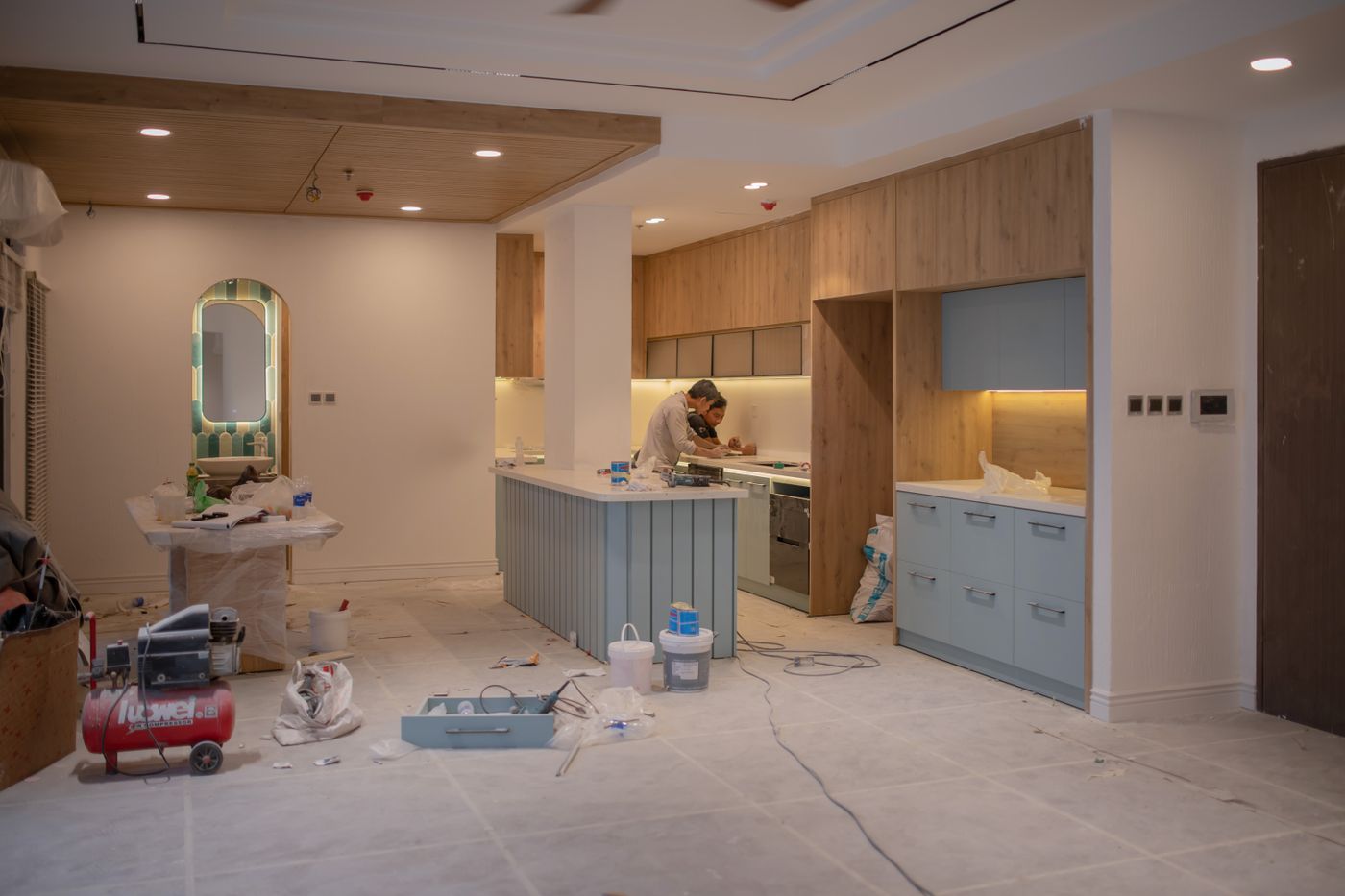
What the veteran needs to prepare
Before applying for a VA renovation loan, the veteran should have a clear idea of the purchase price range and the types of repairs they want to undertake. It helps to get preliminary contractor estimates before making an offer, so the veteran knows the approximate acquisition cost. The lender will also require a credit check and a certificate of eligibility to confirm the veteran qualifies for the VA loan benefit. The property must meet minimum property requirements set by the VA, which means it must be safe, sanitary, and structurally sound after renovations. Some homes that are in very poor condition may not qualify even with repairs, so a pre-offer inspection is advisable.
Once the loan is approved, the lender releases funds in stages as the work is completed. The contractor submits invoices and the lender sends an inspector to verify progress before releasing the next payment. This protects both the veteran and the lender by ensuring the money is spent on the intended improvements. The veteran does not have to manage the funds directly, which reduces the risk of misallocation.
Financing limits and lender overlays
The VA renovation loan amount is subject to the same VA loan limits as any other VA mortgage, which means there is no maximum loan amount for veterans with full entitlement, but lenders may impose their own caps based on the borrower's income and debt-to-income ratio. Additionally, some lenders have overlays that limit the percentage of the loan that can go toward repairs relative to the purchase price. A typical overlay might require that the repair costs do not exceed 30 percent of the as-completed value. Veterans shopping for a lender should ask about such overlays upfront, because they can affect which properties are viable.
A lender with experience in VA renovation loans can help the veteran navigate these limits. For instance, Carlos Scarpero, VA Mortgage Specialist, NMLS 1674385 works with veterans to structure deals that fit both the VA guidelines and the lender's internal policies. This includes advising on which repairs add the most value for the cost and how to present the project to the appraiser for the best as-completed value.

Key points to remember
- The VA renovation loan amount is based on the as-completed value, not just the purchase price plus repairs.
- If repair costs are too high relative to the neighborhood's ceiling, the veteran may need to adjust the deal or bring cash.
- Getting contractor estimates before making an offer helps the veteran set realistic expectations.
- Lender overlays can restrict the percentage of the loan used for renovations, so it pays to ask about them early.
By understanding how the math works in real purchase examples, a veteran can approach a fixer-upper with confidence, knowing what the loan can cover and where they might need flexibility. The VA renovation loan is a powerful tool, but its success depends on accurate numbers and a clear plan for the work ahead.